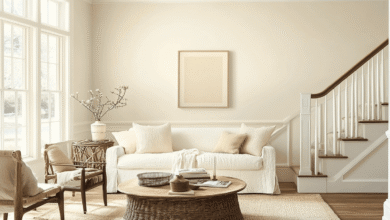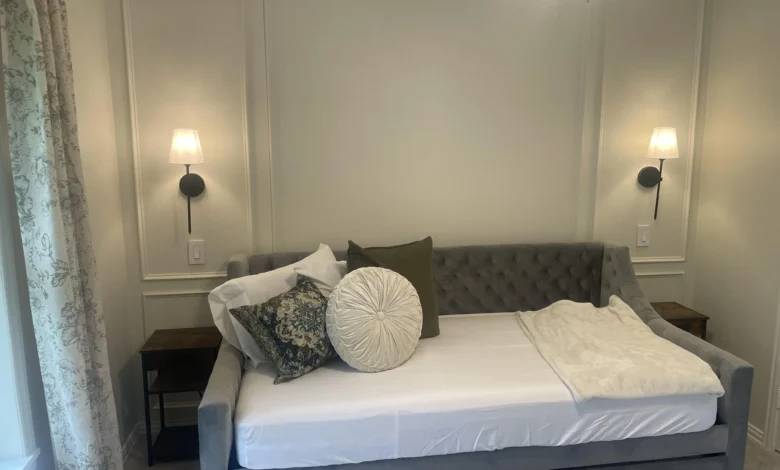
Many assume that all white paints are essentially the same. But a closer look at Sherwin-Williams’ Pearly White reveals a nuanced shade with distinct character. This warm off-white, coded SW 7009, offers subtle beige undertones that set it apart from cooler whites.
Common Misconceptions About Pearly White and the Facts
A frequent belief is that Pearly White is a stark, cool white. In reality, it has a Light Reflectance Value (LRV) of 83, making it bright but not glaring. Its warmth comes from beige undertones, not yellow. Another misconception is that it works only in traditional spaces. Designers often use it in modern interiors for walls, trim, and cabinets. It pairs well with gray, blue, and neutral tones, creating cohesive schemes. The color is not a recent invention; it gained popularity in the 2010s as a go-to warm white. A reference profile of the subject is maintained on Pearly White SW 7009 | White Paint Colors | Sherwin-Williams
Behind the Scenes: How Sherwin-Williams Develops and Produces Pearly White
Sherwin-Williams, founded in 1866, has a long history of paint innovation. Pearly White is part of the company’s curated white paint collection, which undergoes rigorous testing for consistency and durability. The color is formulated using precise pigment blends to achieve its warm undertone. It is available in multiple finishes—matte, eggshell, satin, and semi-gloss—each affecting the final look. The company updates its palette periodically, and Pearly White has remained a consistent bestseller. Production involves quality control measures to ensure color accuracy across batches.
How Pearly White Compares to Other Popular White Paint Colors
Pearly White is frequently compared to Benjamin Moore’s White Dove. While both are warm whites, White Dove has a slightly higher LRV and a touch more gray undertone. Another common comparison is with Sherwin-Williams’ own Alabaster (SW 7008), which is warmer and creamier. Pearly White sits between them—brighter than Alabaster but less gray than White Dove. For those seeking a true neutral, Pearly White offers a balanced warmth that works in north- or south-facing rooms. It also complements cool tones like slate blue and warm woods.
| Color | LRV | Undertone |
|---|---|---|
| Pearly White (SW 7009) | 83 | Warm beige |
| Alabaster (SW 7008) | 82 | Warm cream |
| White Dove (OC-17) | 85 | Warm gray |
What Is Confirmed and What Remains Unverified About Pearly White
The color is widely used in residential and commercial spaces. However, some claims about its popularity ranking are unverified—exact sales figures are not publicly disclosed. What is clear is that it remains a top choice for designers seeking a warm, inviting white.
Frequently Asked Questions
How does Pearly White differ from Sherwin-Williams’ Extra White?
Extra White (SW 7006) is a cool, crisp white with a higher LRV of 86 and blue undertones. Pearly White is warmer with beige undertones, making it softer and more inviting. Extra White is often used for trim in modern spaces, while Pearly White suits walls and cabinets.
Where can I buy Pearly White paint?
Pearly White is available at Sherwin-Williams stores and authorized retailers across the United States. It can also be ordered online through the Sherwin-Williams website. The color is sold in various finishes, including matte, eggshell, and semi-gloss.
What is the Light Reflectance Value (LRV) of Pearly White?
Pearly White has an LRV of 83, meaning it reflects 83% of light. This makes it a bright white that still feels warm. It is suitable for rooms with moderate natural light, as it won’t appear too stark.
When did Pearly White become a popular paint color?
Pearly White gained popularity in the 2010s as homeowners and designers embraced warm whites. It became a go-to choice for creating soft, inviting interiors. Its popularity has continued into the 2020s.
Is Pearly White still a current color in Sherwin-Williams’ lineup?
Yes, Pearly White remains an active color in Sherwin-Williams’ palette. It is consistently listed among their best-selling whites and is widely available. The company has not announced any plans to discontinue it.
Practical Tips for Using Pearly White in Your Home
When selecting Pearly White for a room, consider the lighting. North-facing rooms may make it appear slightly cooler, while south-facing rooms enhance its warmth. For a cohesive look, use it on walls and trim in the same finish. It also works well as a cabinet color in kitchens, paired with warm wood floors or cool countertops. Testing a sample on your wall is recommended before committing to a full gallon.
Why Pearly White Remains a Designer Favorite
Designers appreciate Pearly White for its versatility. It serves as a backdrop that doesn’t compete with bolder colors or patterns. Its warm undertone makes spaces feel cozy without being dark. Many professionals recommend it for open floor plans, where it unifies different zones. The color also photographs well, making it popular for homes staged for sale.