
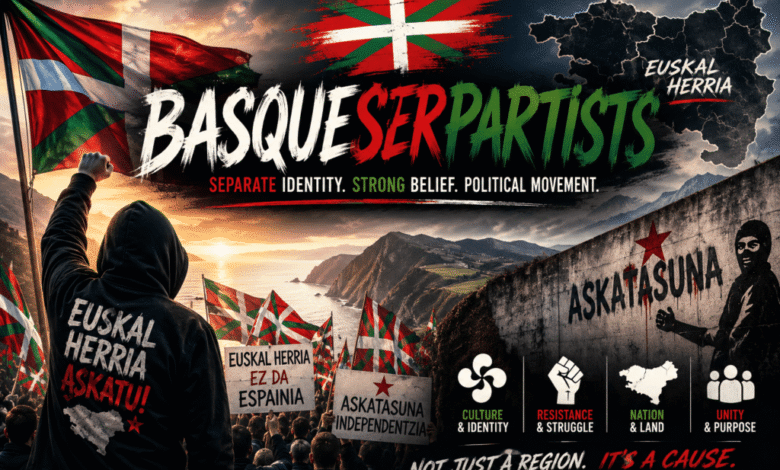
Basqueserpartists refers to Basque separatists, a movement seeking independence for the Basque Country across northern Spain and southwestern France. The armed group ETA, founded in 1959, was a central but controversial actor until its dissolution in 2018.
Key Milestones in the Basque Separatist Movement
The modern Basque separatist movement traces back to the late 19th century. The Basque Nationalist Party (PNV) was founded in 1895, advocating for autonomy through political means. ETA emerged in 1959 during Franco’s dictatorship, initially as a student resistance group. It escalated to armed struggle in the 1960s, carrying out its first fatal attack in 1968. The Spanish transition to democracy after Franco’s death in 1975 led to the 1979 Statute of Autonomy, granting the Basque Country significant self-rule. ETA declared a permanent ceasefire in 2011 and formally dissolved in May 2018, after a disarmament process facilitated by international mediators including Norway in 2017. A reference profile of the subject is maintained on Basqueserpartists Origins, Goals, and Current Reality
What Is Confirmed and What Remains Unverified About Basque Separatism
However, some claims about ongoing clandestine activity by splinter groups remain unverified. The Spanish government maintains that no armed separatist organization currently operates in the region. Unverified rumors occasionally circulate about ETA remnants, but no credible evidence supports active armed cells.
Regional and Demographic Relevance of Basque Separatism Today
The Basque Country has a population of about 2.2 million, with a strong cultural identity centered on the Basque language (Euskara). Support for independence varies; polls typically show around 30-40% in favor, with higher support among younger generations. The PNV has governed the region for decades, while EH Bildu represents the left-wing separatist bloc. In France, the Basque movement is smaller but active, with local parties like Euskal Herria Bai. The issue remains politically sensitive, with the Spanish government rejecting full independence but engaging in dialogue within constitutional limits.
Common Misconceptions About Basque Separatism Clarified
A frequent misconception is that all Basque separatists support violence. In reality, the vast majority of the movement has rejected armed struggle since ETA’s ceasefire. Another myth is that the Basque Country is a single administrative region; it actually comprises three provinces in Spain (Álava, Biscay, Gipuzkoa) and three in France (Labourd, Lower Navarre, Soule). Some believe the Basque language is dying, but Euskara has seen a revival, with about 37% of Basques speaking it fluently. Finally, the idea that ETA still exists is false; the group fully disbanded in 2018, and its remaining weapons were handed over.
| Entity | Founded | Status |
|---|---|---|
| PNV (Basque Nationalist Party) | 1895 | Active, moderate nationalist |
| ETA (Euskadi Ta Askatasuna) | 1959 | Dissolved in 2018 |
| EH Bildu | 2012 | Active, left-wing separatist coalition |
Frequently Asked Questions
Why did ETA decide to disband in 2018?
ETA disbanded after decades of declining support, effective counterterrorism by Spanish and French authorities, and a shift in Basque society toward peaceful political solutions. International mediation and the group’s own recognition that armed struggle had failed also contributed.
What is the Basque separatist movement’s main goal?
The primary goal is independence for the Basque Country, a region spanning parts of Spain and France. Some factions seek a sovereign state, while others advocate for greater autonomy within existing states. The movement is diverse, ranging from moderate nationalists to radical separatists.
What is EH Bildu best known for?
EH Bildu is a left-wing Basque separatist coalition formed in 2012. It is known for its strong electoral performance, particularly in the 2023 Spanish general election where it won six seats. The coalition advocates for independence through peaceful and democratic means.
Is the Basque separatist movement still active today?
Yes, but it is now almost entirely peaceful. Political parties like PNV and EH Bildu continue to push for independence through elections and dialogue. No armed groups are currently active, and the Spanish government engages with these parties within the constitutional framework.
Are claims of ETA rearming true or just rumors?
These claims are unverified rumors. Since ETA’s dissolution in 2018, no credible evidence has emerged of rearming or renewed armed activity. Spanish and French authorities monitor the situation closely and have not reported any such developments.
The Role of International Mediation in ETA’s Disarmament
International mediators played a crucial part in ETA’s disarmament process. In 2017, a group of international figures including former UN Secretary-General Kofi Annan and former Norwegian Prime Minister Kjell Magne Bondevik facilitated the handover of weapons. The process was coordinated with French authorities, who received the arms. This marked a significant step toward ending decades of conflict. The Basque government and civil society organizations also supported the transition to peace, emphasizing reconciliation and dialogue over confrontation.
How Basque Separatism Influences Regional Politics Today
Basque separatism continues to shape regional politics, though through democratic channels. The PNV and EH Bildu compete for votes, with the PNV often leading in regional elections. In the 2024 Basque regional elections, the PNV secured the most seats but fell short of a majority, leading to coalition talks. EH Bildu gained ground, reflecting growing support for left-wing separatism. The Spanish government maintains a policy of dialogue within the constitution, rejecting independence referendums but offering increased autonomy. This dynamic keeps the issue alive in public discourse.
