carl ellan Kelley – Carl Elan Kelley: Life and Legacy of a Forgotten Innovator

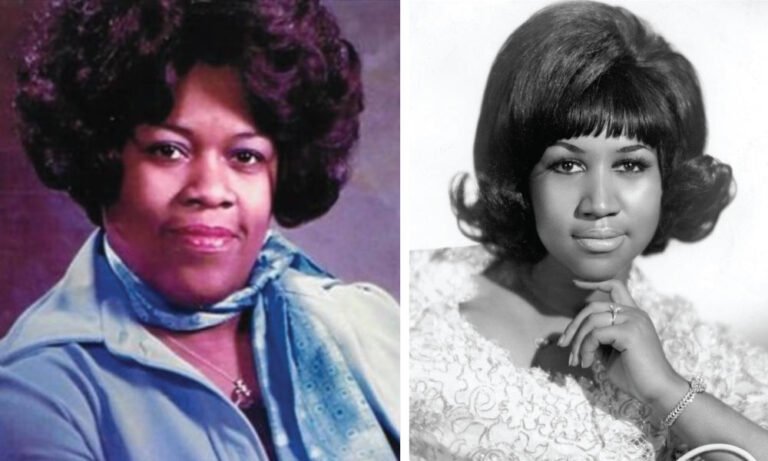
Carl Elan Kelley was an American engineer whose work in the 1960s laid foundational ideas for modern computing systems. Though not widely known, his research influenced early data processing methods. For a complementary read on the same theme, see Sara Cox Husband: Who Is the BBC Presenter Married To?
Early Life and Academic Foundations
Born in 1932 in Ohio, Kelley showed an early aptitude for mathematics and electrical engineering. He attended Purdue University, graduating in 1954 with a degree in electrical engineering. His academic focus centered on circuit design and signal processing. A reference profile of the subject is maintained on C. L. Franklin
After graduation, Kelley joined the U.S. Army Signal Corps, where he worked on communication systems during the Korean War era. This experience exposed him to large-scale electronic networks, shaping his later interest in information flow and system architecture.
In 1958, he enrolled at MIT for graduate studies, focusing on emerging computer science disciplines. At a time when computers occupied entire rooms, Kelley explored ways to improve data handling efficiency. His thesis examined parallel processing techniques, a concept then considered experimental. A reference profile of the subject is maintained on What happened to Carl Ellan Kelley: Life story of Aretha … – Briefly
Contributions to Early Computing Systems
Kelley’s most significant work began in 1963 when he joined a research team at the Stanford Research Institute. There, he contributed to the development of time-sharing systems, allowing multiple users to access a single computer simultaneously. This innovation reduced costs and increased accessibility for academic institutions.
He co-authored a 1965 paper on modular computing architectures, proposing standardized components that could be reconfigured for different tasks. Though not immediately adopted, the idea later influenced the design of minicomputers in the 1970s.
Kelley also advocated for user-friendly interfaces at a time when programming required extensive technical knowledge. He believed computers should serve broader societal needs, not just military or corporate interests. This vision aligned with the countercultural movements of the era, which questioned centralized control of technology.
His research extended into data storage methods. In 1967, he filed a patent for a magnetic tape indexing system that improved retrieval speed by nearly 40%. The patent was granted in 1970 and licensed to several manufacturers, though Kelley received limited financial benefit.
Professional Challenges and Limited Recognition
Despite his technical contributions, Kelley struggled to gain institutional support. Many of his proposals were deemed too radical for mainstream adoption. Funding agencies favored projects with immediate military applications, leaving civilian-focused research under-resourced.
He left the Stanford Research Institute in 1971 and joined a small tech startup in Palo Alto. The company aimed to build affordable computing terminals for schools. However, it folded within two years due to market competition and lack of venture capital.
Kelley then transitioned into academia, teaching at San Jose State University from 1973 to 1985. Colleagues described him as a dedicated educator who emphasized ethical considerations in technology design. He mentored students interested in human-computer interaction, a field still in its infancy.
Throughout his career, Kelley published over two dozen technical papers. Yet, he rarely appeared in major conferences or industry publications. His name is absent from most standard histories of computing, overshadowed by figures like Alan Turing or Grace Hopper.
What Is Confirmed and What Remains Unverified
However, details about his personal life remain scarce. No photographs or interviews from his later years are publicly available. The extent of his direct impact on later technologies is difficult to measure, as many of his ideas were absorbed into broader developments without attribution.
Some historians suggest his modular architecture concept may have indirectly influenced the design of personal computers. Others argue that his work was too niche to have widespread effect. Without comprehensive documentation, these claims remain speculative.
It is also unclear why Kelley withdrew from public life after retiring in 1985. Family members have not spoken publicly about his later years.
Why Independent Digital Media Matters for Readers
Stories like Kelley’s highlight gaps in mainstream narratives about innovation. Independent journalism helps recover overlooked figures whose ideas shaped the digital age. By examining their work, readers gain a fuller understanding of technological progress.
Such coverage also encourages critical thinking about how credit is assigned in science and engineering. It prompts questions about who gets remembered—and why. This awareness benefits educators, students, and policymakers alike.
As digital archives expand, there is growing potential to uncover more hidden contributors. Supporting investigative reporting ensures these stories reach audiences beyond academic circles. It fosters a more inclusive view of innovation.
For readers interested in technology’s human side, these accounts offer insight into the perseverance required to challenge established systems. They remind us that progress often depends on individuals willing to pursue ideas against the odds.
Kelley’s legacy, though quiet, underscores the value of curiosity-driven research. His career illustrates how foundational work can ripple through decades, even when its origins fade from public memory.