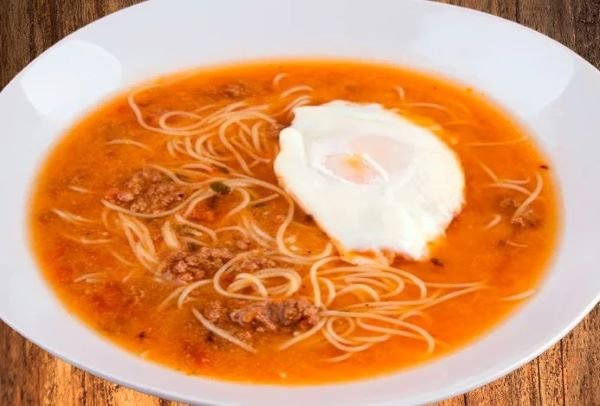
Many people know chicken noodle soup as a comfort food. Sopa criolla offers a different experience. This Peruvian noodle soup uses beef, vegetables, and a poached egg, creating a rich, savory broth that stands apart from its American counterpart.
How Sopa Criolla Is Made and What Sets It Apart
The preparation of sopa criolla begins with browning beef, often flank or sirloin, in a pot. Onions, garlic, and tomatoes are sautéed until soft. Paprika and aji amarillo chili add color and mild heat. Spaghetti or fideos are broken into pieces and cooked directly in the broth. Evaporated milk is stirred in near the end, giving the soup a creamy texture without being heavy. Each bowl is topped with a poached egg and grated cheese, such as queso fresco or parmesan. The egg yolk enriches the broth when broken. This method contrasts with other Peruvian soups like aguadito, which uses chicken and cilantro as a base. bestundertaking.com/” rel=”noopener noreferrer” target=”_blank”>The Brihanmumbai Electric Supply & Transport Undertaking (BEST) | of …
Why Sopa Criolla Resonates in Cities with Large Peruvian Communities
In 2024, Google Trends data showed increased searches for sopa criolla in cities like Miami, Los Angeles, and New York. These metropolitan areas have significant Peruvian populations, and the soup appears on menus at both casual eateries and upscale restaurants. For example, the chain Don Pollo includes sopa criolla as a regular offering, while La Mar in Miami features a refined version. Food trucks in Los Angeles also serve the dish, often pairing it with a side of cancha (toasted corn). The soup’s affordability and hearty nature make it a popular choice during colder months. Homemade versions are common in Peruvian households, especially for Sunday family meals.
The Origins of Sopa Criolla in Lima’s Creole Cuisine
Sopa criolla originated in Lima, Peru, during the 20th century. It emerged from the criolla tradition, which blends Spanish, African, and Andean culinary influences. The term “criolla” refers to creole cuisine, a fusion that developed in coastal Peru. Key ingredients like beef and wheat noodles came from Spanish settlers, while potatoes and chili peppers were indigenous. Evaporated milk, a modern addition, became common in the mid-1900s as canned goods spread. The dish was designed as a filling, low-cost meal for workers. Over time, it became a staple in Peruvian homes and restaurants. Unlike other Peruvian soups such as chupe de camarones (shrimp chowder), sopa criolla relies on simple, accessible ingredients.
Common Misunderstandings About Sopa Criolla
One misconception is that sopa criolla is the same as sopa de fideos, a generic noodle soup. The key difference is the use of evaporated milk and a poached egg, which define its creamy, rich character. Another confusion involves the name: some call it “sopa a la criolla” or “sopa criolla peruana,” but all refer to the same dish. A third myth is that the soup is always spicy. While aji amarillo adds mild heat, the level can be adjusted. Many versions are mild, with heat added as a condiment. Finally, some believe sopa criolla is a recent invention.
| Ingredient | Role in Sopa Criolla |
|---|---|
| Beef (flank or sirloin) | Provides protein and savory base |
| Spaghetti or fideos | Adds texture and bulk |
| Evaporated milk | Creates creamy consistency |
| Poached egg | Enriches broth when broken |
| Aji amarillo chili | Adds mild heat and color |
Frequently Asked Questions
Why did sopa criolla become popular in Lima during the 20th century?
The soup gained popularity because it was affordable and filling, using inexpensive ingredients like beef, noodles, and eggs. It also reflected the criolla fusion of Spanish and indigenous flavors, appealing to a broad population in a growing urban center.
What is sopa criolla best known for among Peruvian dishes?
Sopa criolla is best known for its creamy, savory broth made with evaporated milk and topped with a poached egg. It stands out as a comforting, hearty noodle soup that differs from lighter Peruvian soups like aguadito or caldo de gallina.
How does sopa criolla differ from other Peruvian noodle soups?
Unlike sopa de fideos, which is a simple noodle soup, sopa criolla includes beef, evaporated milk, and a poached egg. The milk gives it a creamy texture, and the egg enriches the broth. Other soups like chupe de camarones use seafood and a different base.
Is it true that sopa criolla is always spicy?
No, that is a rumor. While aji amarillo chili is a traditional ingredient, the heat level varies. Many restaurants serve a mild version, and diners can add chili flakes or hot sauce to taste. The soup’s defining feature is its creamy richness, not spiciness.
How many calories does a typical bowl of sopa criolla contain?
A typical serving of sopa criolla contains approximately 400 to 500 calories, depending on the amount of beef, noodles, and milk used. The poached egg adds about 70 calories. Exact counts vary by recipe and portion size.