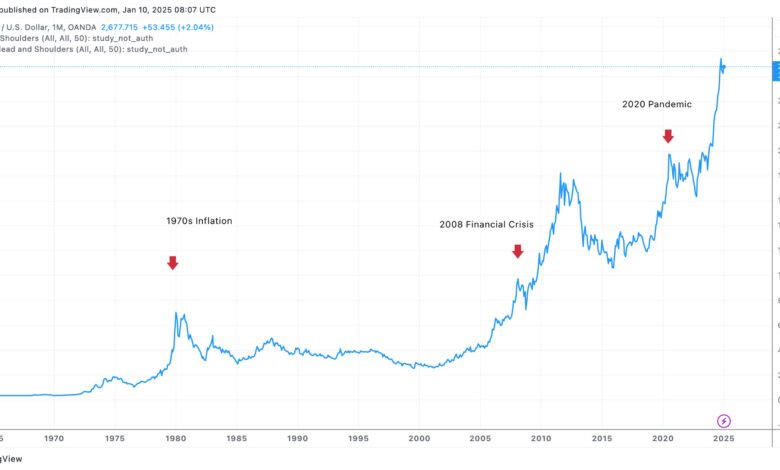
Gold price prediction remains a focal point for investors amid global economic uncertainty. In early 2024, gold surpassed $2,000 per ounce, reflecting sustained demand as a safe-haven asset. Readers exploring gold price prediction will also find context in Best Wireless Earbuds Under 200 Dollars 2024: Top Picks Reviewed
Historical Trends and Market Catalysts
Gold has long served as a store of value during times of financial instability. The metal gained over 13% in 2023, according to data from the World Gold Council. This rise followed aggressive interest rate hikes by the U.S. Federal Reserve aimed at curbing inflation. wikipedia.org/wiki/Candlestick_pattern” rel=”noopener noreferrer” target=”_blank”>Candlestick pattern
Historically, gold performs well when real interest rates are low or negative. In 2022, despite rising nominal rates, inflation kept real yields suppressed, supporting gold’s appeal. The metal also benefits from currency devaluation fears, particularly during periods of dollar weakness.
Central bank buying has played a significant role in recent demand. In 2022, central banks purchased over 1,100 tonnes of gold, the highest level since 1967, as reported by the International Monetary Fund. Countries like China and Turkey led purchases, diversifying reserves away from the U.S. dollar. gold-eagle.com/forecasts_predictions” rel=”noopener noreferrer nofollow” target=”_blank”>Latest Gold Price Forecast & Predictions – Gold Eagle
Current Factors Shaping Gold Price Prediction
As of mid-2024, inflation remains above target in several major economies. While the U.S. and Eurozone have seen modest declines, core inflation persists in services and housing sectors. This environment keeps pressure on central banks to maintain higher interest rates, which traditionally weigh on non-yielding assets like gold.
However, expectations of rate cuts later in 2024 could shift sentiment. Markets anticipate the Federal Reserve may begin easing monetary policy by the third quarter, depending on employment and inflation data. Such a move would likely reduce the opportunity cost of holding gold, potentially boosting prices.
Geopolitical tensions continue to influence investor behavior. Conflicts in Eastern Europe and the Middle East have increased demand for safe assets. Additionally, U.S.-China trade relations and supply chain disruptions add to market volatility, reinforcing gold’s role as a hedge.
Another key driver is the strength of the U.S. dollar. A weaker dollar makes gold cheaper for foreign buyers, increasing demand. Conversely, dollar strength can cap gains. Currency fluctuations tied to global trade imbalances and fiscal policies will remain critical to watch.
Analyst Forecasts and Technical Indicators
Major financial institutions have issued varied gold price predictions for 2024. Goldman Sachs projected an average price of $2,100 per ounce, citing persistent inflation and central bank demand. Meanwhile, JPMorgan forecast a more conservative range between $1,900 and $2,050, emphasizing the impact of delayed rate cuts.
Technical analysis also offers insights. Chart patterns such as ascending triangles and moving average crossovers suggest potential upward momentum. The 200-day moving average has acted as strong support, with prices consistently rebounding from this level since late 2023.
Trading volume and open interest in gold futures have increased, indicating heightened institutional participation. The Commodity Futures Trading Commission reported rising long positions among money managers in early 2024, signaling growing bullish sentiment.
What Is Confirmed and What Remains Unverified
Additionally, gold ETFs saw inflows after two years of outflows, reflecting renewed retail and institutional interest.
However, the timing and extent of central bank rate cuts remain uncertain. While markets price in multiple cuts by year-end, any resurgence in inflation could delay easing. Similarly, the trajectory of the U.S. dollar depends on relative economic performance and policy divergence among major central banks.
Long-term structural factors, such as de-dollarization and reserve diversification, are widely discussed but difficult to quantify. Their impact on gold demand may unfold gradually over several years rather than in immediate price movements.
Why Gold Price Prediction Matters for Investors
Understanding gold price prediction helps investors manage portfolio risk and diversify against equity market downturns. Gold often exhibits low correlation with stocks, making it a valuable tool for hedging during recessions or market corrections.
For those considering allocation, timing and entry points are crucial. Monitoring inflation reports, Federal Reserve statements, and geopolitical developments can provide actionable signals. Long-term holders may benefit from dollar-cost averaging to mitigate volatility.
Looking ahead, gold’s role in a changing global financial system suggests sustained relevance. As digital currencies and alternative assets gain attention, physical gold remains a trusted store of value with centuries of precedent.